
Lumos
A telemedicine app focused on eye care
UI/UX Design
Project Overview
This was done as a course work, with the aim of creating a feature that provides accessible and convenient eye care services for people living in Nigeria.
My Role
Solo UI/UX designer for course work project, where I worked on the UX research, interface design and developed the design system for the product.
Expertise
Tools
Adobe XD
Adobe Illustrator
Adobe Photoshop
Adobe Premiere Pro
Adobe After Effects
Deliverables
UI Screens
UX Flow
Prototype
Promotional Video
Timeline
6 weeks

Background
This product highlights the relationship between the patient, doctor, and vendor, offering suggestions for improving their interaction.

Challenges
According to studies, telemedicine is one of the main areas of concentration for governments investing in health information technologies. There isn't yet a telemedicine app focused on eye care services available in Nigeria. This, as well as any related problems that could arise as a result of these worries, are what this solution aims to address.
Goal
The goal is to provide an accessible, supportive, affordable, informative, and convenient solution for eye care and management in Nigeria.

Project Scope
There are three groups of users this product targets:
-
Patients requiring eye care services to enhance their wellbeing
-
Doctors, who need improved collaboration and work effectiveness; including:
-
Optometrists
-
Opthalmologists
-
Opticians
-
-
Vendors that provide medicines for patients, including:
-
Pharmacists
-
Pharmacologists
-
Chemists, etc.
-

Design Process

User Persona
This product is designed for three user groups: doctors, patients, and vendors.


Research Findings
I carried out interviews with 10 of my coursemates and analysed the results. These are my findings:
-
Inadequate access to basic eye care is a problem for many Nigerians. This is caused by a number of things, including the distance to medical facilities, a lack of time, and the high cost of treatment.
-
Clinics maintain most of the patients' medical records on paper. Files may be lost while relocating to a new home or business, and computer viruses can completely wipe out any data stored there.
-
Doctors' schedules can become jumbled and appointments can be missed. This is common if they have too many patients to see every day or if they have to visit multiple clinics or outreaches in a day.
-
Long lines are common at hospitals and clinics, which can be discouraging for doctors and patients with minor ailments that could have been resolved without having to visit the hospital.
User Journey Mapping
Based on information gleaned from the interview and mapped against the user's pain points and design concept, this was created to represent the user's journey. This is done to make sure that the design concept and functionality of the product are thoroughly reviewed, meeting all of the user's needs and grievances. Additionally, it helped to prevent the design of extraneous features.


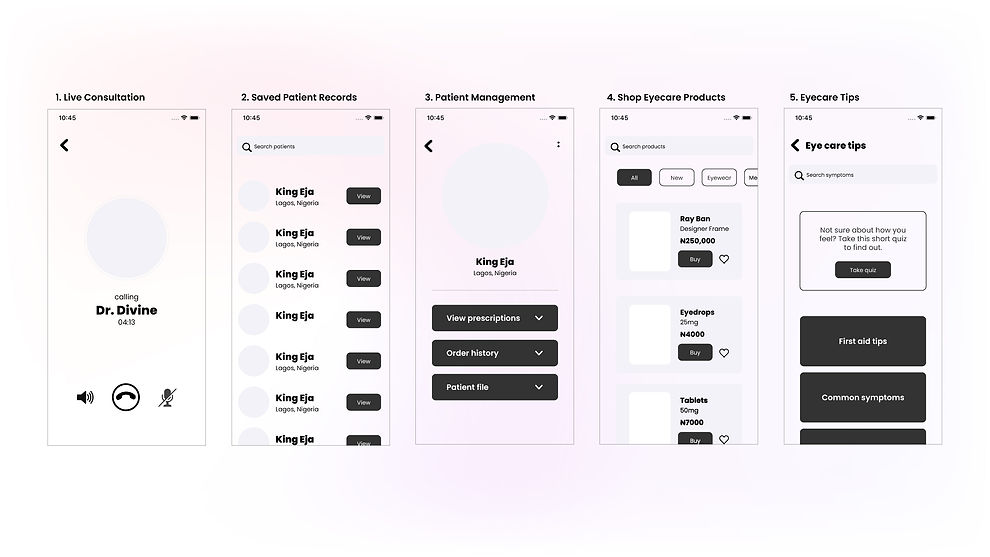
Design Solution/Low-fidelity Prototype
A telemedicine app for aiding the delivery of high-quality primary eye care services with the goal of making it accessible and convenient. Examples of some solutions preferred includes:
-
Live Consultation: Patients can get diagnosed by doctors through live consultation services, schedule appointments, and get urgent medical support in cases of emergencies.
-
Medical Record Storage: Patient information will be better archived, centralised, and can be shared among the physicians when needed as well as accessed by the patients. This will eliminate manual paperwork.
-
Patient Management: Ready Access to patient's prescription, order history, and patients files by doctors where necessary.
-
Shopping: Patients and users can shop for glasses and eye accessories such as designer eye frames, ropes, lens cleansers, etc.
-
Eye Care Tips & Quiz: Users can also be educated about eye health and first aid practices, as well as take eye tests and exercises. They can also take part in quizzes to help determine what symptoms they're experiencing and ways to manage them.
Information Architecture
This structure illustrates the flow of the product as the user would use it, showing its features, navigations and hierarchy.

High Fidelity Prototype
The final user interface was designed once the low-fi prototype had been tested by my course mates who served as the usability testers.


Promotional Video
This was created, as part of the course requirements, to advertise the product on social media platforms.
Lumos for Doctors
Lumos App Promo
Lumos for Vendors